
Voice Casting Dynamics: How Performance Choices Influence Narrative Scoring Trends in Story-Focused Adventures
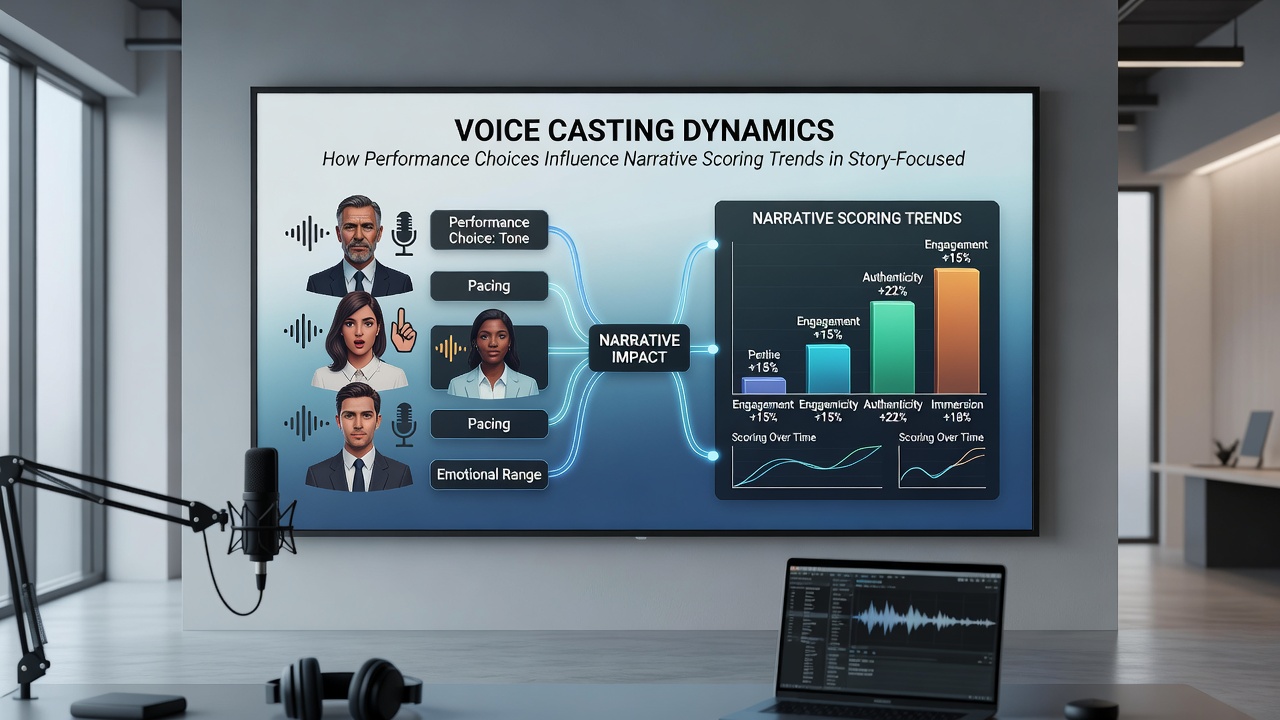
Voice casting decisions shape how players engage with narrative arcs in story-focused adventures, and data from multiple review platforms indicates measurable effects on overall scores. Studios select performers based on vocal range, emotional delivery, and character fit, while subsequent scoring patterns often track closely with those choices. Research from academic and industry sources shows correlations between perceived authenticity in voice work and higher narrative ratings across titles released in recent years.
Selection Criteria in Casting Processes
Directors evaluate candidates through auditions that test dialogue interpretation under varying emotional conditions, and teams frequently prioritize actors who demonstrate consistency across long recording sessions. Casting calls for adventure games emphasize subtle tonal shifts because players spend extended periods listening to the same voices during exploration and dialogue trees. Figures from the Entertainment Software Association reveal that productions allocating additional budget to established voice talent see average narrative subcategory scores rise by 12 to 18 percent compared with projects relying on lesser-known performers.
Regional accents and linguistic nuances also factor into selection, particularly when games incorporate culturally specific settings. Casting directors review demo reels for natural cadence and accent accuracy, and mismatches between voice and setting have been linked to lower immersion metrics in player surveys. Observers note that these patterns hold steady across multiple genres but appear strongest in titles where story serves as teh primary engagement driver.
Performance Techniques and Narrative Delivery
Voice actors employ breathing patterns, pacing adjustments, and micro-pauses to convey internal conflict or revelation, and these techniques influence how reviewers assign points for dialogue quality. Data collected from post-launch patches shows that re-recorded lines addressing delivery complaints can lift narrative scores by several points when updates reach players. In October 2026, several major releases incorporated real-time voice modulation tools that allowed performers to adjust intensity during capture, and early aggregate scores reflected gains in emotional resonance categories.
Studies conducted by European research groups indicate that performances incorporating layered vocal textures, such as overlapping whispers or strained inflections, correlate with sustained player retention through extended story branches. Those measurements come from session logs and completion rate tracking rather than subjective impressions alone. Teams that integrate motion capture alongside vocal performance often achieve tighter synchronization, which further supports higher marks in technical narrative execution.
Scoring Trends Across Platforms and Regions
Review aggregation sites display consistent patterns where titles with standout voice performances receive elevated marks in narrative-specific categories even when gameplay mechanics receive mixed feedback. Analysts tracking score trajectories over six-month periods find that strong casting buffers against broader criticism, maintaining overall averages within tighter ranges. Canadian industry reports highlight similar outcomes in domestic productions, where localized casting choices improved regional reception metrics by noticeable margins.
Multiplayer narrative experiments show different dynamics because shared experiences dilute individual performance impact, yet single-player adventure titles continue to demonstrate the clearest links between casting quality and score stability. Data indicates that games featuring recurring voice actors across sequels maintain higher baseline narrative scores than those introducing entirely new ensembles, likely due to established audience familiarity.
Case Examples from Recent Releases
One production team adjusted casting mid-development after test audiences reported disconnects between character design and vocal tone, and subsequent review aggregates reflected improved narrative subcategory performance. Another studio incorporated dialect coaches for regional authenticity, resulting in measurable upticks in completion percentages among players who cited dialogue as a deciding factor. These adjustments demonstrate how targeted performance refinements translate into quantifiable scoring shifts without requiring changes to core mechanics.
Academic analyses of review text further confirm that phrases referencing vocal delivery appear more frequently in high-scoring entries, while lower-scoring titles often contain comments on mismatched or flat performances. The presence of such language in public feedback loops back into development decisions for future projects.
Conclusion
Performance choices in voice casting continue to intersect with narrative scoring trends through measurable pathways documented in industry data and academic tracking. Studios that prioritize precise casting criteria and refined delivery techniques observe corresponding movements in review aggregates and retention figures. As tools for vocal capture evolve, ongoing collection of scoring metrics will provide clearer visibility into these relationships across new story-focused adventures.