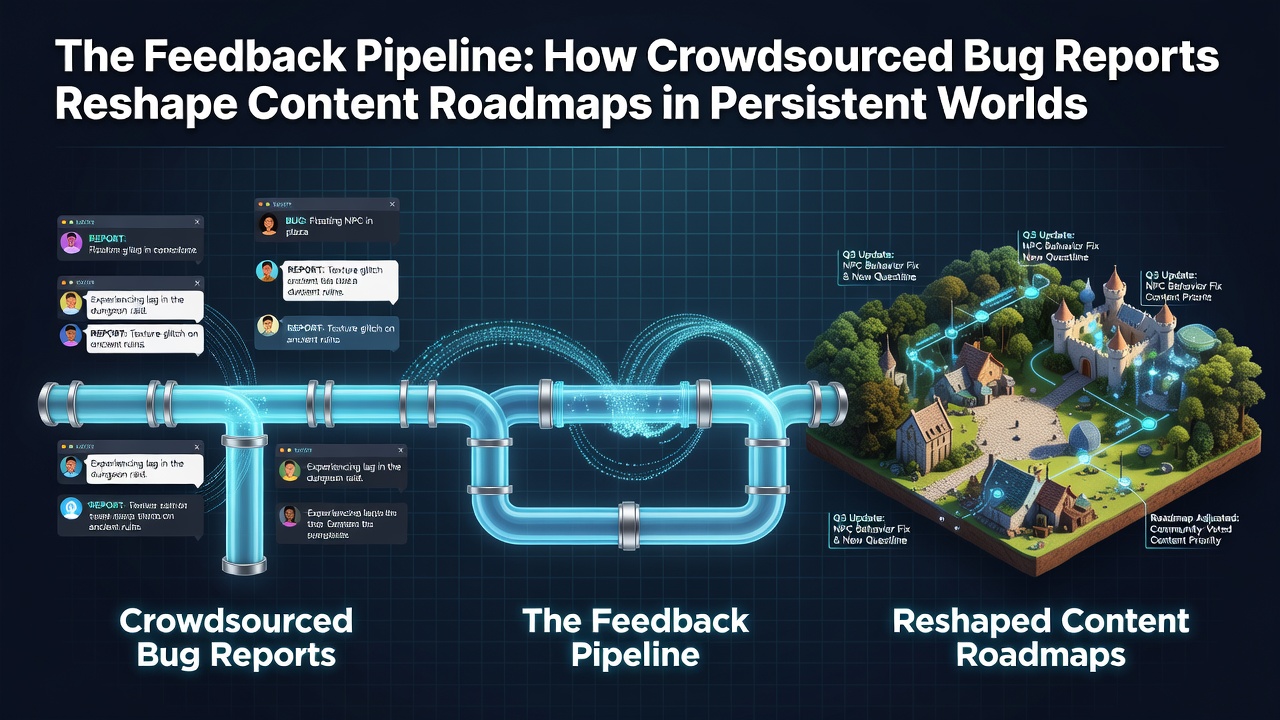
The Feedback Pipeline: How Crowdsourced Bug Reports Reshape Content Roadmaps in Persistent Worlds
Persistent worlds such as massively multiplayer online games rely on continuous updates to maintain player engagement, and crowdsourced bug reports have become a primary mechanism for identifying issues that influence development priorities. Game studios integrate player-submitted data from dedicated trackers, forums, and in-game reporting systems to adjust their content roadmaps, often reallocating resources toward fixes that affect large player populations. According to industry reports from the Entertainment Software Association, live service titles receive thousands of bug submissions weekly, with teams using automated triage systems to categorize severity and frequency before scheduling patches.
Developers at companies managing titles like Final Fantasy XIV and EVE Online process these reports through centralized databases that track patterns across regions, while September 2026 saw several studios publish updated transparency logs detailing how community input shifted quarterly roadmap items. Researchers at the University of California, Santa Cruz have documented cases where recurring reports on server stability prompted earlier deployment of backend optimizations rather than new quest content. This approach allows teams to address systemic problems that emerge only after millions of player hours accumulate in shared environments.
Mechanisms of Data Collection and Prioritization
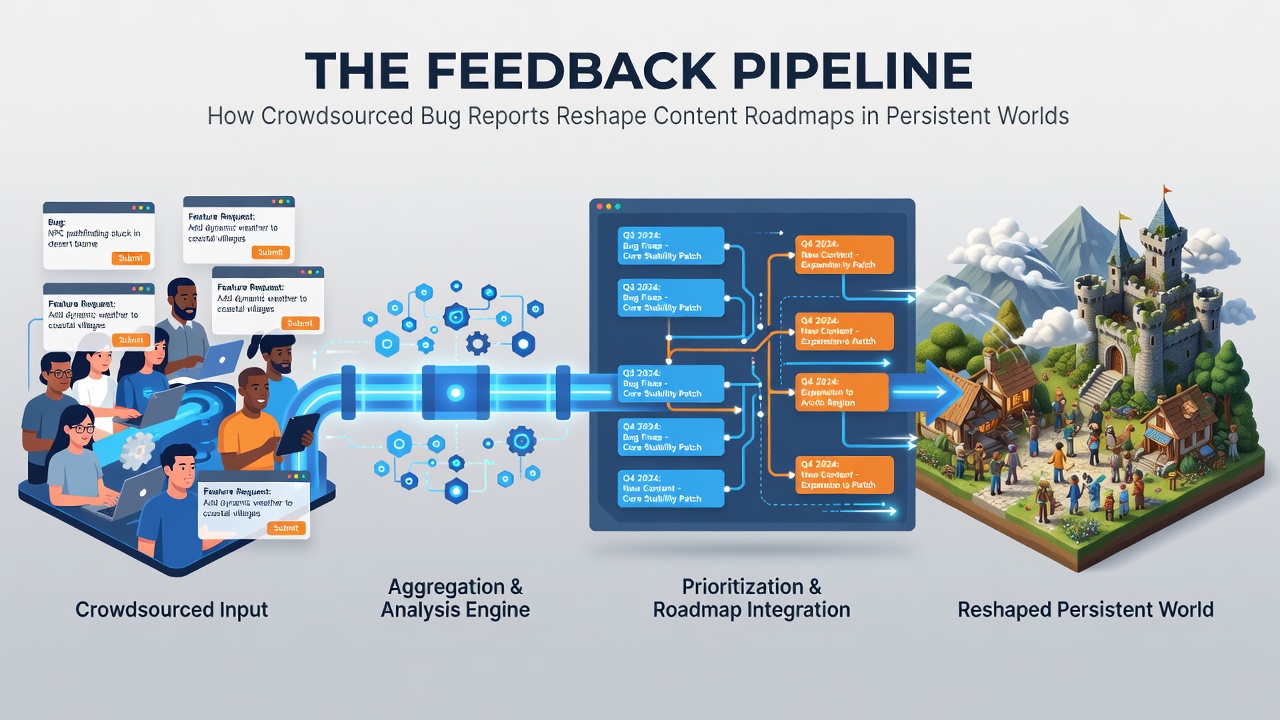
Studios deploy multiple channels for gathering reports, including official bug databases, Discord integrations, and Reddit megathreads that feed into internal dashboards. Automated scripts flag duplicate submissions and correlate them with telemetry data such as crash logs and performance metrics, creating weighted scores that determine which items enter the next development sprint. Observers note that this pipeline reduces reliance on internal QA alone because player bases encounter edge cases across diverse hardware configurations and playstyles that testing environments rarely replicate fully.
Cross-referencing occurs when community managers tag reports with affected features, then route them to design leads who evaluate impact against planned expansions. Data from the Interactive Games and Entertainment Association indicates that persistent world operators in Australia and the Asia-Pacific region have adopted similar systems, leading to faster iteration cycles on economy-related bugs that influence player retention across time zones.
Impact on Roadmap Adjustments
When aggregated reports reveal widespread navigation errors or item duplication glitches, studios frequently postpone feature additions to allocate engineering time toward stability. One documented instance involved a European developer reallocating six weeks of work from a new raid tier after player data highlighted connectivity problems that affected raid participation rates. Academic analyses from teh University of Melbourne have tracked how such shifts correlate with measurable changes in daily active users following targeted patches.
Roadmap documents published by live service teams now often include footnotes referencing community-reported issues that prompted specific changes, creating a visible feedback loop. Teams monitor post-patch metrics to confirm resolution rates, then feed those results back into future prioritization algorithms that weigh both bug severity and player sentiment scores derived from social channels.
Regional Variations in Implementation
North American and European studios tend to emphasize public bug trackers with visible status updates, whereas operators in other markets integrate reports more discreetly through localized apps that aggregate submissions before escalation. Government-linked digital economy reports from Canada highlight how these differences affect update frequency, with some regions achieving sub-two-week turnaround on critical exploits compared to longer cycles elsewhere. Persistent world operators adjust staffing models accordingly, hiring community analysts who specialize in translating raw reports into actionable technical tickets.
Collaboration between studios and platform holders has also evolved, with console manufacturers providing additional telemetry layers that complement player submissions. This combined dataset informs decisions on content delivery schedules, particularly when hardware-specific bugs surface after major operating system updates.
Conclusion
Crowdsourced bug reports now function as an integral component of content planning in persistent worlds, driving measurable changes in how development resources are distributed across fixes and new features. Studios continue to refine triage algorithms and transparency practices to sustain long-term player investment, while external research institutions track the broader effects on industry update patterns. As these pipelines mature, the relationship between player input and roadmap decisions grows increasingly structured and data-driven across global markets.