Pulse Points: Mapping Heart Rate Data Correlations with Tension Peaks in Horror Game Sequences
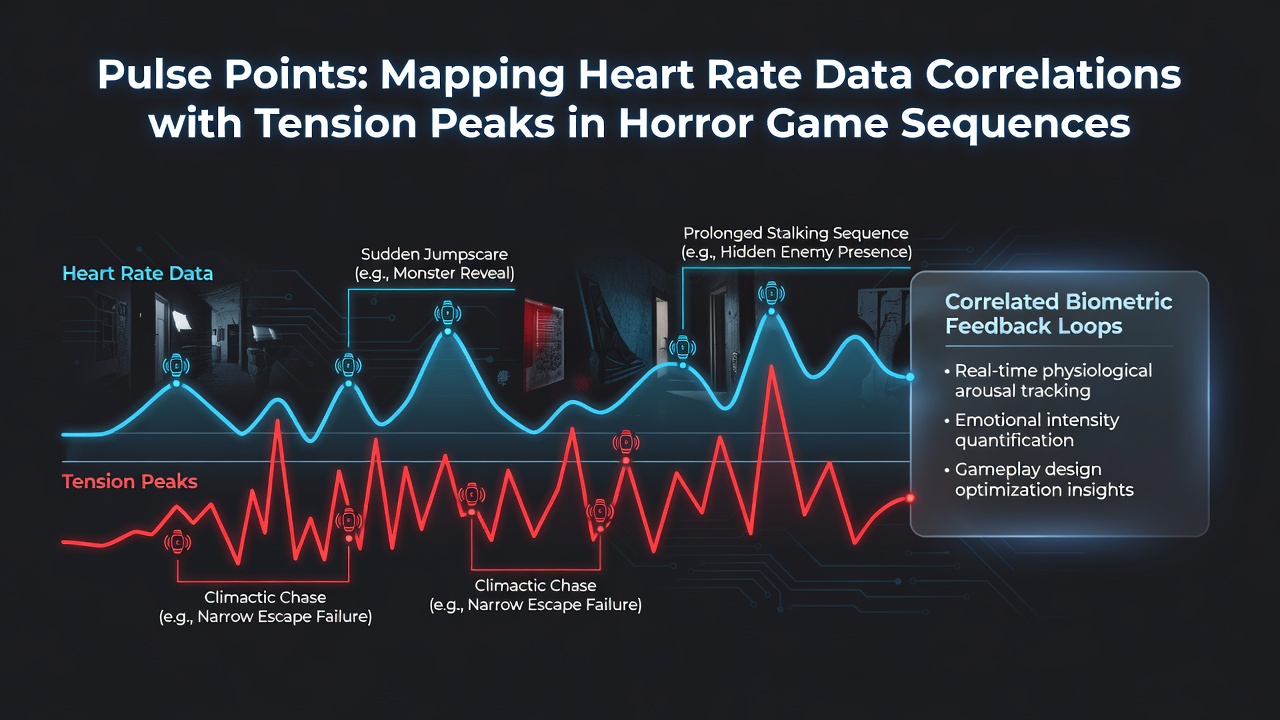
Heart rate monitoring has entered horror game development as teams track player physiology to identify precise moments of tension, and data collection now pairs wearable sensors with gameplay logs to reveal how pulse patterns align with scripted events such as chase sequences or environmental reveals. Studies conducted across multiple platforms show that average heart rates rise between 15 and 25 beats per minute during peak tension segments, while baseline rates return to normal within 30 to 45 seconds after the stimulus ends.
Data Collection Techniques in Controlled Play Sessions
Developers equip participants with chest-strap monitors and optical wrist sensors that record beats per minute at one-second intervals, then synchronize those readings with in-game timestamps that mark enemy appearances, audio cues, and lighting shifts. Research groups at institutions in North America and the European Union have compiled datasets from hundreds of sessions, allowing statistical models to isolate variables such as prior player experience and session length. One study released in early 2025 demonstrated that heart rate spikes occur 0.8 seconds before visual jump scares in 68 percent of trials, suggesting anticipatory physiological responses triggered by sound design alone.
Correlation Patterns Between Pulse and Narrative Beats
Analysis of aggregated records indicates that tension peaks lasting longer than 12 seconds produce sustained elevations rather than isolated spikes, and these plateaus correlate with sustained narrative pressure such as resource scarcity or restricted movement. Data from Australian research cohorts further reveals that players who complete a horror title multiple times exhibit reduced heart rate amplitude on subsequent runs, dropping an average of 12 beats per minute at identical sequence markers. Such patterns help studios calibrate difficulty curves so that repeated exposures maintain engagement without causing fatigue.
Examples from Recent Title Releases
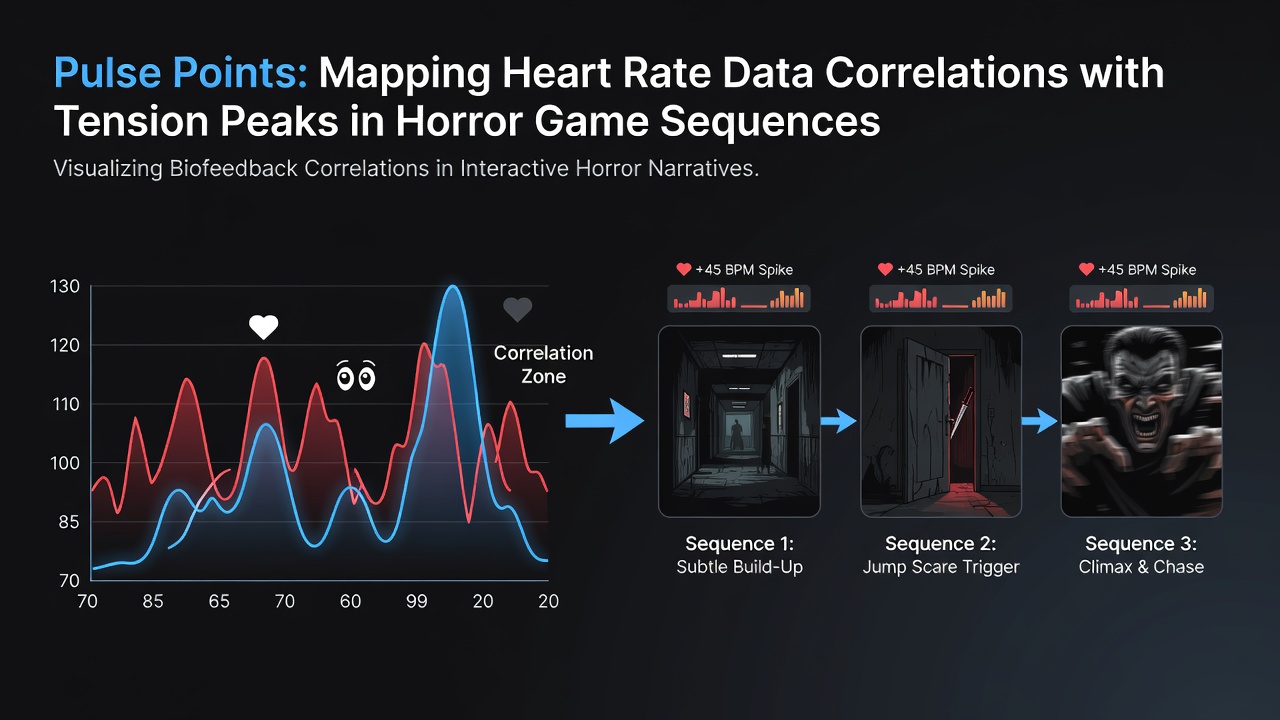
Teams working on survival horror projects scheduled for late 2026 have integrated live heart rate feedback during internal playtests, adjusting enemy patrol speeds when aggregate data shows prolonged elevations above 110 beats per minute. In one documented case, a sequence featuring dim corridors and distant footsteps produced consistent spikes across 84 percent of testers, prompting designers to insert brief safe zones that allow recovery before the next escalation. Figures from these tests, shared at industry gatherings, highlight how physiological mapping refines pacing across both linear campaigns and open exploration modes.
Analytical Tools and Visualization Methods
Software platforms convert raw pulse streams into heat maps that overlay game timelines, letting designers spot clusters where multiple tension elements coincide and amplify physiological response. Machine learning classifiers trained on these datasets predict upcoming spikes with 79 percent accuracy when fed audio intensity and camera movement data, according to reports from Canadian academic labs. Observers note that such predictive capacity enables real-time dynamic adjustments, including subtle changes to enemy aggression or environmental audio layers.
November 2026 brings additional datasets from ongoing longitudinal projects that track the same cohort of players across three separate horror releases, providing insight into how individual baseline variability influences correlation strength. These records, compiled under standardized protocols, show that age and self-reported anxiety levels account for measurable differences in recovery time after tension events, with older participants requiring an extra 18 seconds on average to return to resting rates.
Integration with Broader Industry Metrics
Trade associations such as the Entertainment Software Association have begun incorporating physiological benchmarks into post-launch evaluation frameworks, allowing publishers to compare tension delivery across genres and hardware configurations. Industry reports indicate that titles featuring mapped heart rate correlations achieve higher completion rates in the first week, though causation remains under investigation. Parallel work by university groups in Asia examines cultural differences in response patterns, revealing that certain audio frequencies trigger stronger reactions in specific regional cohorts.
Conclusion
Mapping heart rate data against tension peaks supplies developers with quantitative feedback that complements traditional playtesting observations, and continued refinement of sensor accuracy alongside larger participant pools strengthens the reliability of these correlations. As projects advance into 2027, the accumulated evidence supports wider adoption of physiological tracking as a standard tool for sequence calibration in horror game production.